

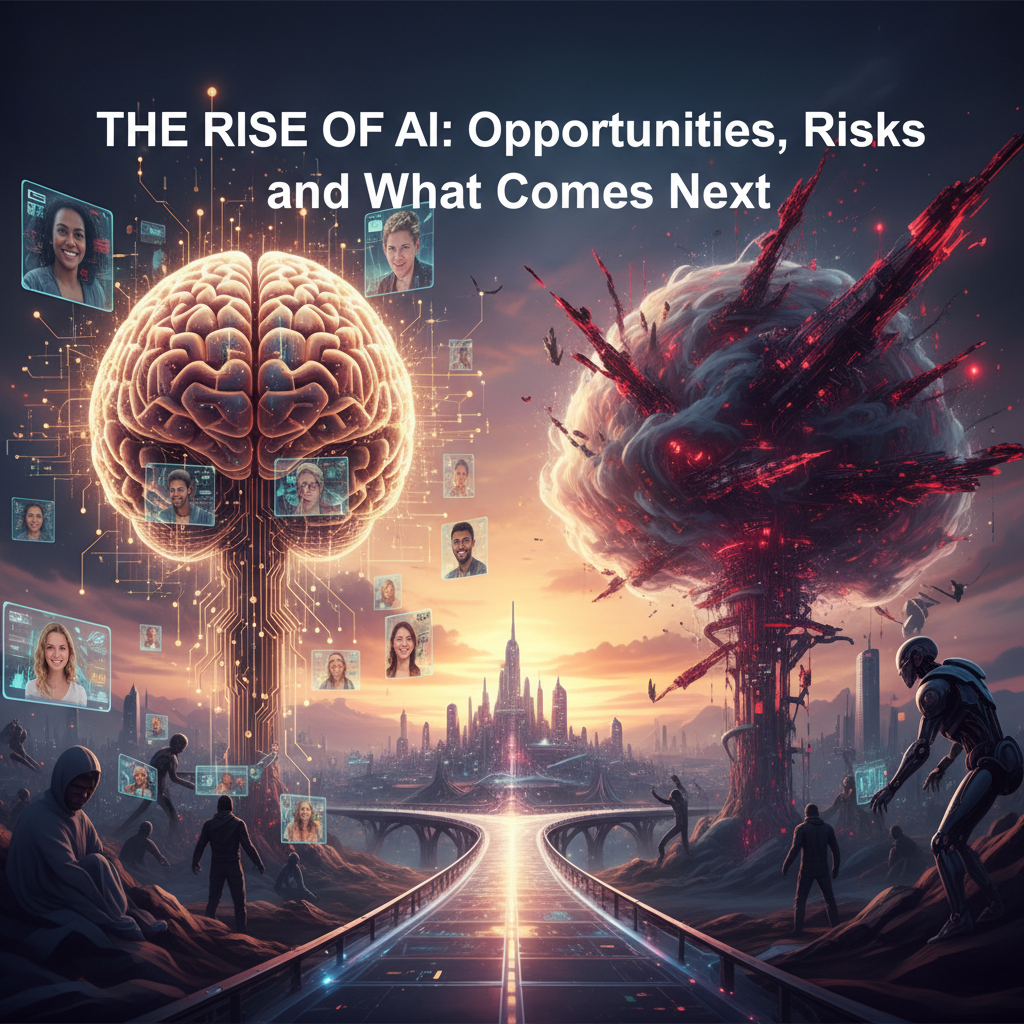
The Rise of AI: Opportunities, Risks, and What Comes Next
Artificial intelligence has officially transitioned from the realm of science fiction into the cornerstone of our daily lives. From the algorithms that curate our social media feeds to advanced medical diagnostics that save lives, the technological landscape is shifting at an unprecedented pace. This rapid acceleration brings a complex web of possibilities and challenges that demand our careful attention. As we stand at this digital crossroads, understanding the trajectory of artificial intelligence is more crucial than ever.

[IMAGE: A futuristic cityscape blending digital neural networks with modern architecture symbolizing the rise of artificial intelligence.]


The Boundless Opportunities of Modern AI
The most celebrated aspect of the artificial intelligence boom is its incredible potential to drive innovation and solve complex problems. Industries are being revolutionized in ways we could only imagine a decade ago.

Transforming Healthcare and Productivity
In the medical field, machine learning models analyze vast datasets to detect early signs of diseases like cancer with astonishing accuracy. Meanwhile, in the corporate world, automated tools handle repetitive administrative tasks, allowing human workers to focus on creative problem-solving and strategic thinking. Key benefits include:
- Accelerated drug discovery and genetic research
- Personalized education platforms tailored to individual student needs
- Enhanced data analysis for smarter business decisions
- Streamlined logistics and supply chain optimization
Navigating the Risks and Ethical Dilemmas
Despite the glowing advantages, the widespread adoption of smart systems introduces significant risks that society cannot afford to ignore. Rapid deployment often outpaces regulatory frameworks, leaving room for misuse and unintended consequences.
Addressing Bias and Security Concerns
One major challenge is algorithmic bias, where machine learning models perpetuate or even amplify existing human prejudices found in their training data. Furthermore, automated systems pose a threat to traditional job markets, raising urgent questions about economic displacement. Cybersecurity is another critical battleground, as malicious actors leverage advanced code to launch sophisticated cyberattacks and generate convincing disinformation campaigns.
[IMAGE: A conceptual image of a human hand interacting with glowing digital data streams representing AI security and ethics.]
What Comes Next: The Road Ahead
As we look to the future, the ultimate goal is not to halt technological progress, but to steer it responsibly. Achieving sustainable growth requires unprecedented collaboration between technologists, policymakers, ethicists, and the public.
Building a Collaborative Future
Transparency and robust governance will be the pillars of the next era of innovation. By establishing clear ethical guardrails, we can maximize the benefits of intelligent automation while safeguarding human values. The future of artificial intelligence is not predetermined; it is being shaped by the choices we make today. Embracing this evolution with a balanced perspective ensures that technology remains a powerful tool for human empowerment rather than a replacement for human ingenuity.